


Compare our fabrics
Quick visual comparison — sail, swatch, and microscopic close-up of each.


Can't find your size?
Design your own custom shade sail with our easy configurator.
Create Your Custom Sail →Equilateral Triangle Shade Sail
A perfectly balanced shade sail designed for visual symmetry and reliable performance. With equal sides and clean geometric lines, the Equilateral Triangle Shade Sail delivers even tension, strong UV protection, and a striking architectural look for residential and commercial outdoor spaces.
Accessories
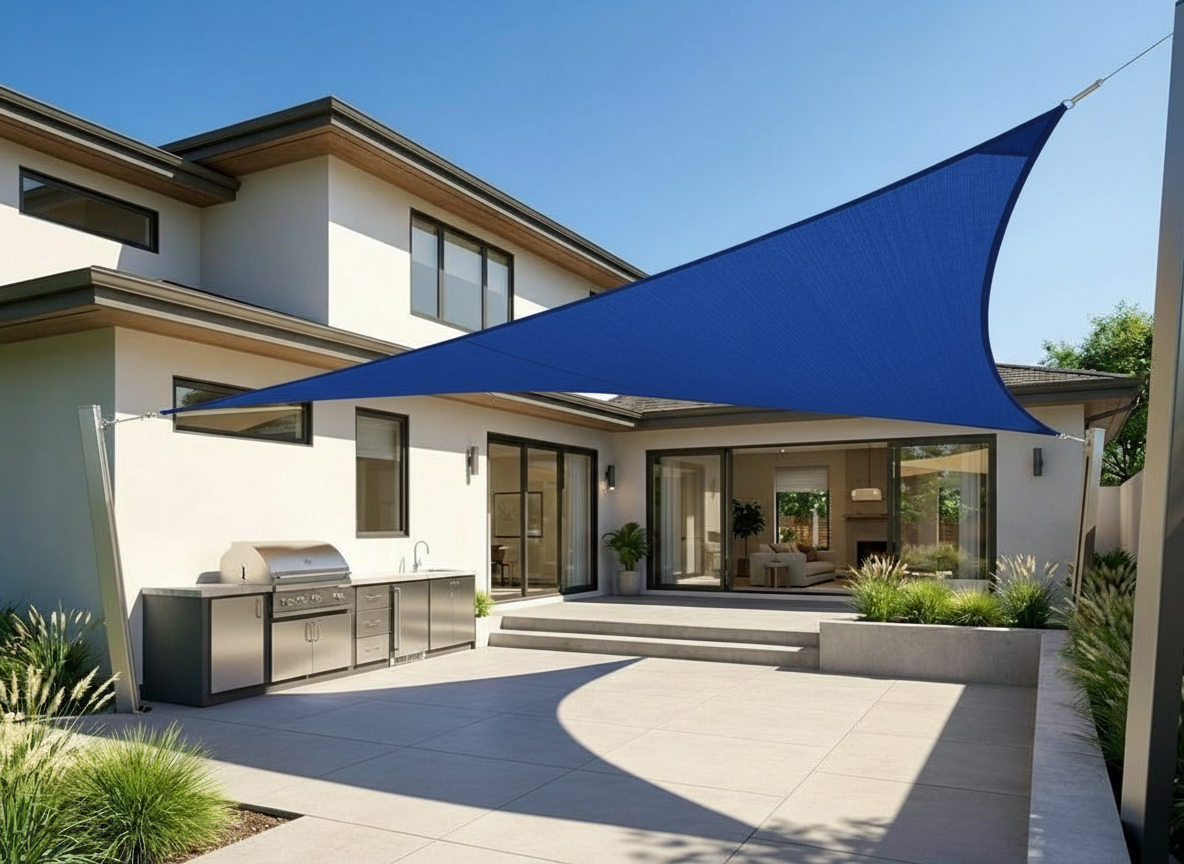
Equilateral Triangle Shade Sail
High Quality Fabric: Built to last with a distinct geometric appeal, our Equilateral Triangle Shade Sail is anything but standard. Designed and manufactured in our custom facility, each sail combines precise symmetry with premium construction to ensure long-term performance and visual impact.
The equal length of all three sides creates uniform tension across the sail, resulting in a secure, stable install with minimal movement when correctly tensioned. Subtly curved edges further enhance this effect, helping the sail maintain a tight, refined profile over time.
A reinforced 38mm webbing edge is triple-stitched into the fabric using UV-resistant PTFE thread, ensuring exceptional strength and durability.
Each corner is finished with a 316 marine-grade stainless steel D-ring, reinforced with multiple layers of webbing for dependable mounting points. Available in premium fabric options including Extrablock and Shadetec, and a wide range of colours, this sail offers excellent UV protection while complementing a variety of architectural and landscape styles.
Whether used individually or as part of a layered design, the Equilateral Triangle Shade Sail is an elegant solution for creating structured, visually striking shade.
- Shape: Equilateral Triangle (three equal sides)
- Fabric Options: Shadetec 320, Extrablock 330, or Monotec 370
- UV Protection:
Shadetec 320: Up to ~93% UV block; ~85% shade factor
Extrablock 330: Up to ~95% UV block; ~90% shade factor
Monotec 370: Heavy-duty fabric with high tensile strength for exposed or large installations - Fabric Weight:
Shadetec 320: ~320 GSM
Extrablock 330: ~330 GSM
Monotec 370: ~370 GSM - Edge Construction: 38mm reinforced webbing, triple-stitched using PTFE long-life thread
- Corners: 316 marine-grade stainless steel D-rings with reinforced webbing layers
- Design: Curved edges for even tension and reduced flapping
- Installation: Suitable for posts, walls, or mixed anchor configurations
- Weather Resistance: Designed for permanent or seasonal installation
- Included: DIY installation guide and recommended hardware options
- Colours: Wide colour range available across all fabric types
Use Cases: Courtyards, patios, schools, playgrounds, commercial outdoor areas
Installation Guide
Step 1: Choose the Right Location.
Before installation, select an appropriate location that offers sturdy anchor points and provides the coverage you need. Consider:
• Sun Exposure: Ensure the sail provides shade where it’s most needed.
• Anchor Points: Identify strong structures like walls, posts to serve as your sail’s support.
Step 2: Gather Tools and Materials
Ensure you have everything needed for a smooth installation:
• Shade Sail in your preferred size and shape.
• Fixings and Hardware such as turnbuckles, D-shackles, eye bolts, and pad eyes.
• Posts (if no existing anchor points are available).
• Tools like a drill, wrench, measuring tape, and ladder.
Step 3: Prepare the Area.
Clear the designated space to ensure an easy and safe installation. Remove any obstacles, furniture, or debris and confirm the area is accessible for securing anchor points.
Step 4: Install Anchor Points
Strong, secure anchor points are essential for a durable installation. Here’s how to set them up:
Using Existing Structures
• Walls or Beams: Drill holes and attach eye bolts or pad eyes into a solid surface like timber , steel or concrete . Brick masonary is not normaly reccomended. Ensure the fixtures are firmly secured to handle tension.
Installing Posts
• Placement: If posts are needed, position them to align with the shade sail’s attachment points.
• Setting Posts: Dig holes one-third the length of the posts and fill with concrete for stability. Allow the concrete to cure fully before attaching the sail.
Step 5: Attach the Shade Sail
With anchor points in place, it’s time to secure the shade sail:
1. Start with One Corner: Attach one corner of the sail to an anchor point using a D-shackle or turnbuckle.
2. Continue Around the Sail: Repeat the process for the remaining corners, connecting each to its anchor point.
3. Secure Tightness: Gradually tighten turnbuckles to ensure the sail is taut but not over-stressed.
Step 6: Check Fixings for Security
After securing the sail, inspect all connections to ensure they are tight and stable:
• Tighten turnbuckles to eliminate slack.
• Check for any loose bolts or fittings.
Step 7: Perform Final Adjustments
Make any necessary adjustments to ensure the sail is evenly tensioned:
• Alignment: Ensure the sail is evenly stretched between anchor points.
• Stability: Verify that all fixings are secure and capable of withstanding wind and weather.
Step 8: Maintain Your Shade Sail
Regular maintenance keeps your shade sail in top condition:
• Clean Periodically: Use a mild detergent and water to remove dirt and debris.
• Inspect Fixings: Check for signs of wear or rust and replace damaged components.
• Re-tension When Needed: Over time, the sail may stretch slightly, so tighten the fixings as necessary.
The honest answer
Why does our shade sail cost more than the one at the hardware store?
| Specification | Hardware-store sail | Shade Space |
|---|---|---|
| Fabric weightA 125gsm sail weighs about the same as a light bedsheet Compare our four fabrics | 125–200 gsm | 320–370 gsm |
| WeaveHow the fabric holds its shape under tension See the weave up close | Tape/tape — flat woven, stretches and sags | Monofilament — locks against the weave |
| UV block90% to 95% is half the UV getting through, not 5% better UV ratings by fabric | "Up to 95%", untested | Up to 98%, published per fabric |
| ThreadThe first thing to fail on a cheap sail How we stitch a sail | Polyester — degrades in UV | SolarFix® PTFE — outlives the fabric |
| Edge reinforcementCable or webbing — both engineered, neither hemmed Cable vs webbing edges | Hemmed | 38mm webbing, triple-stitched |
| Corners & fixings See the hardware | Grommets | 316 marine stainless D-rings, layered reinforcement |
| Fire rating Which fabrics are certified | None | NFPA 701 / ASTM E84 / CA Title 19 (select fabrics) |
| Who honours the warrantyRead the small print on any reseller's site Our workshop since 1944 | The fabric mill — not the seller | Us. We made it. |
| Warranty length Read the warranty | 3 years — storm damage excluded | 10–15 years |
| Realistic life How to make it last | 2–3 years | 10–15 years |
where to install a triangle shade sail?
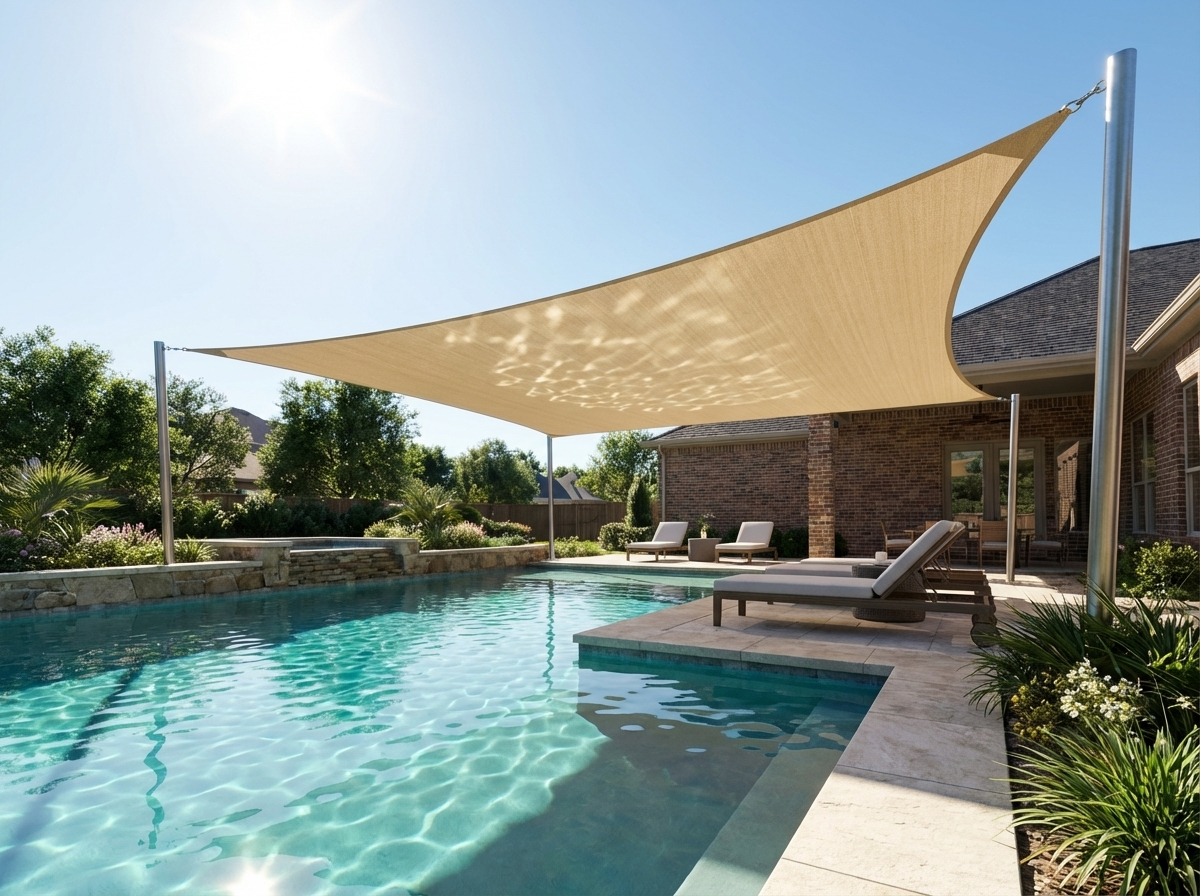
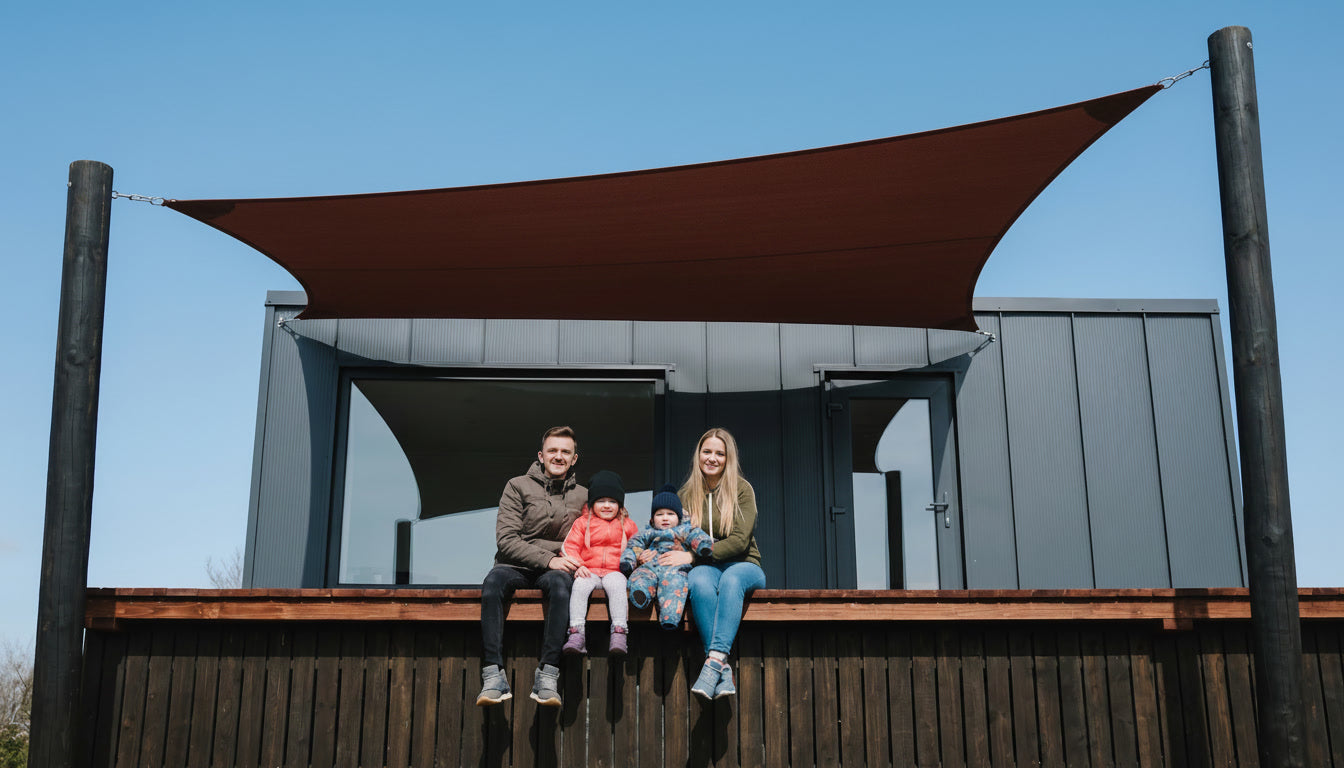
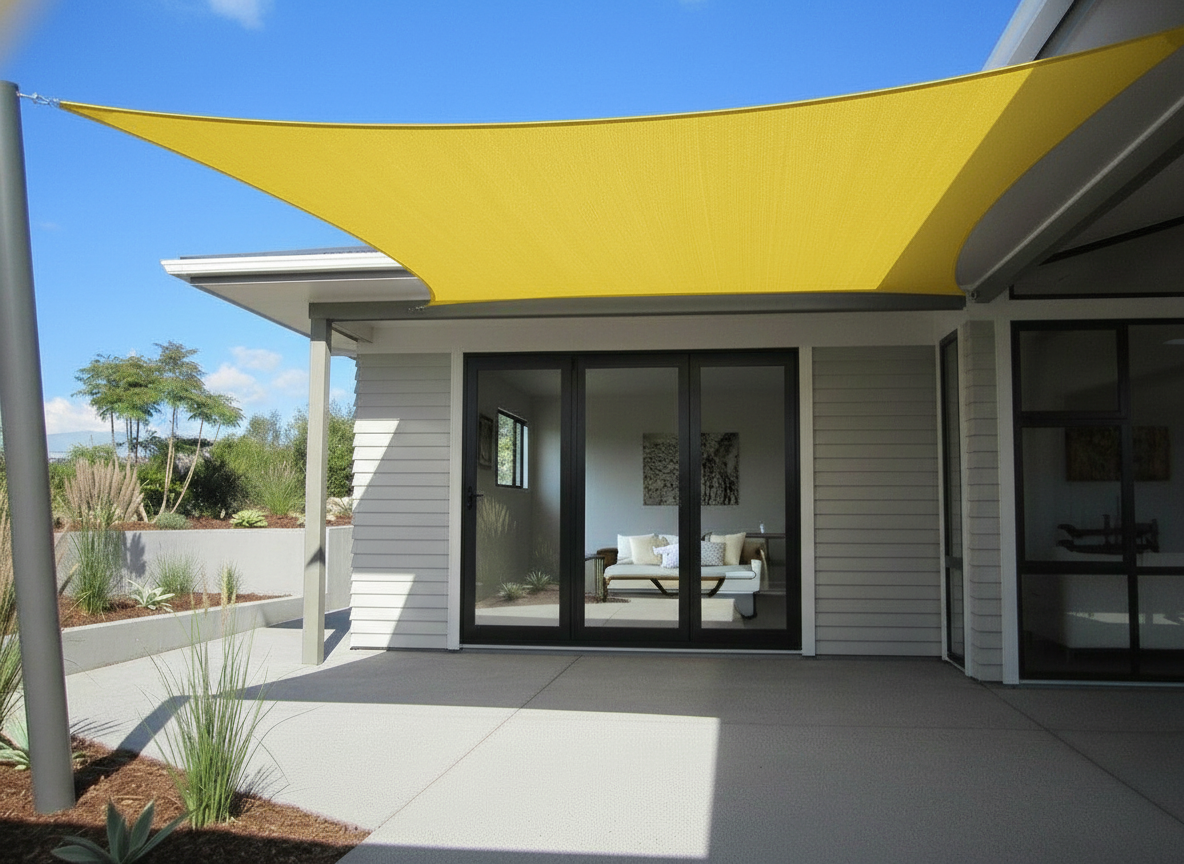
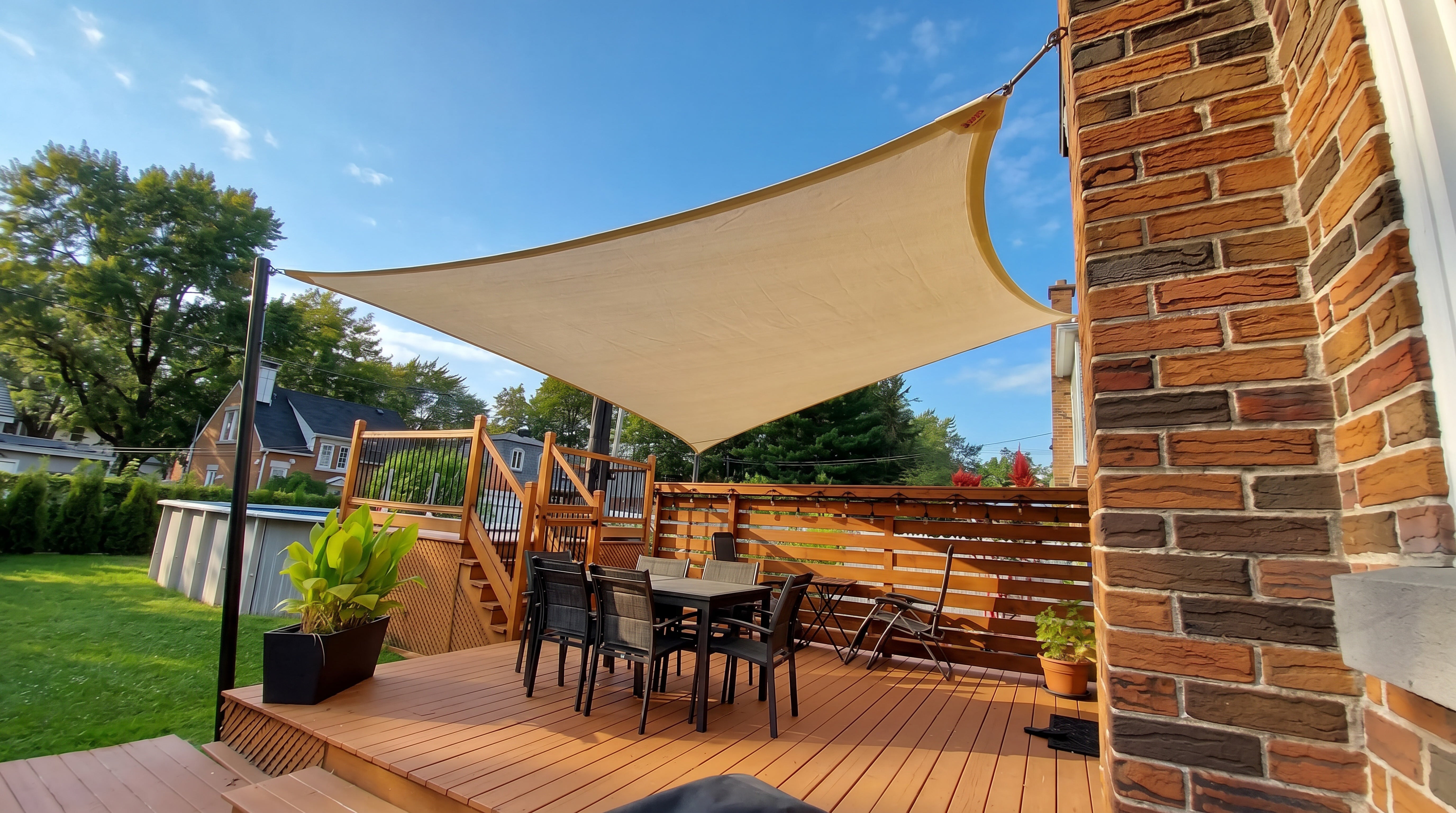
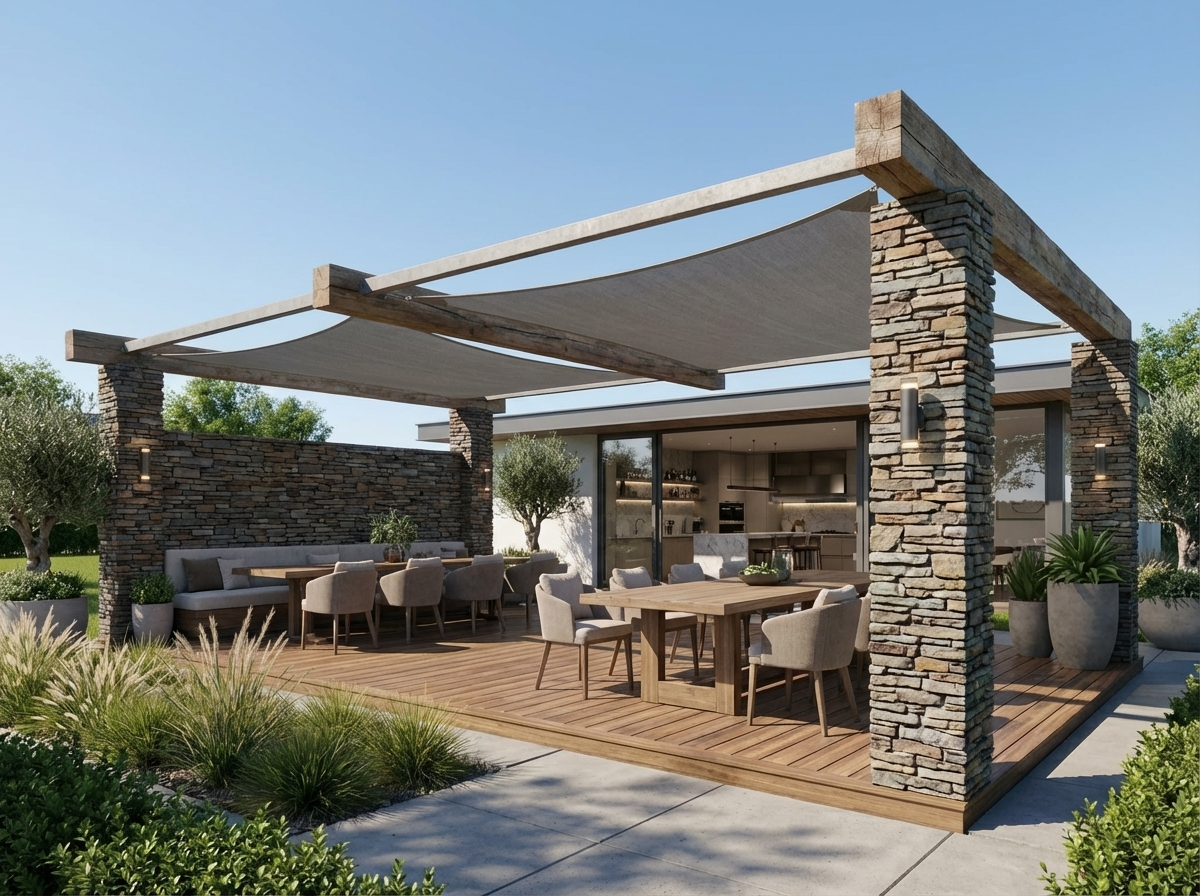
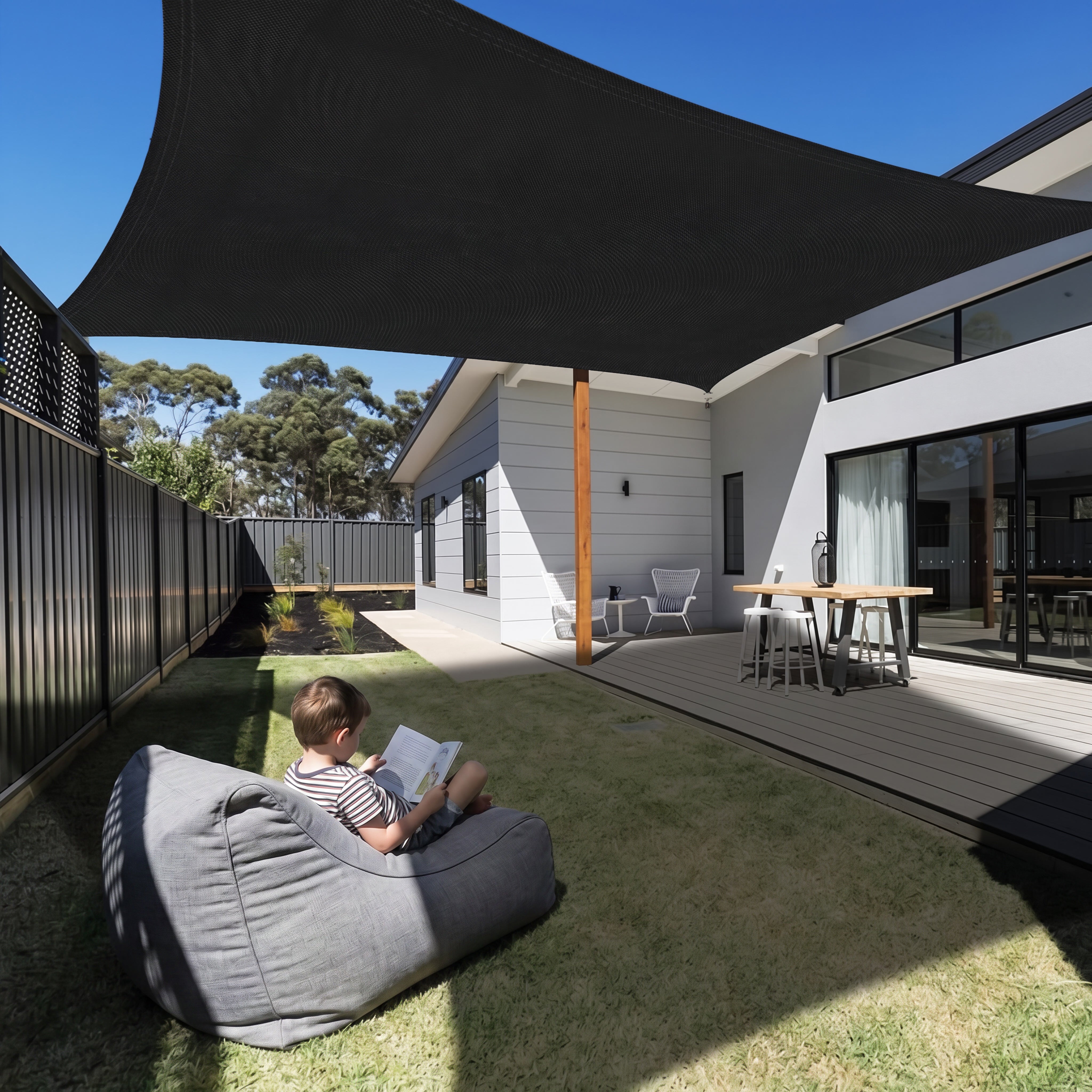
The Equilateral Triangle Shade Sail is ideal for spaces where balance, proportion, and visual impact matter as much as shade coverage. Its equal-sided shape allows for uniform tension and a clean, floating appearance, making it perfect for feature installations, layered sail designs, and open outdoor areas where symmetry enhances the overall layout.

Courtyards & Central Outdoor Spaces
This shape works beautifully in courtyards or central garden areas, where its symmetry creates a strong focal point while delivering effective overhead shade.

Patios & Outdoor Living Areas
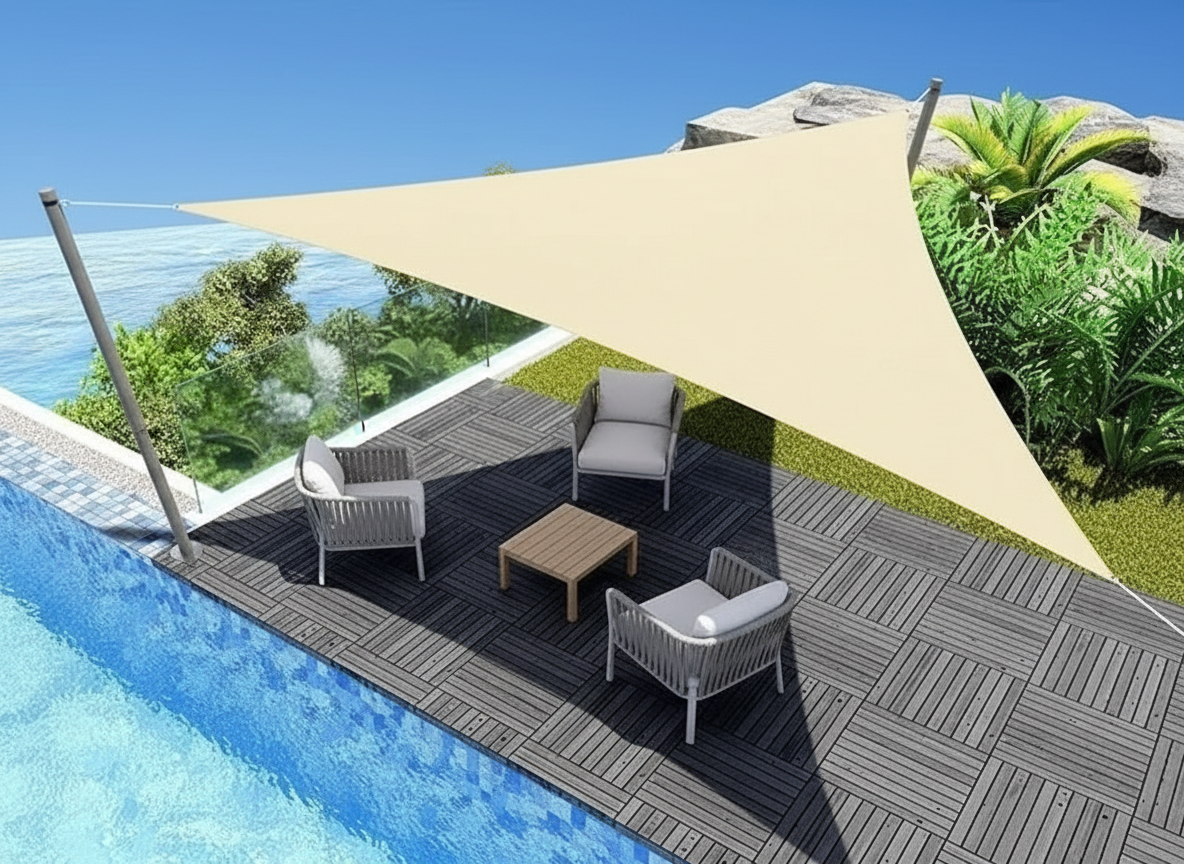
Ideal for seating zones and outdoor lounges. The even geometry provides consistent shade coverage and complements modern and architectural homes.

Layered or Multi-Sail Installations
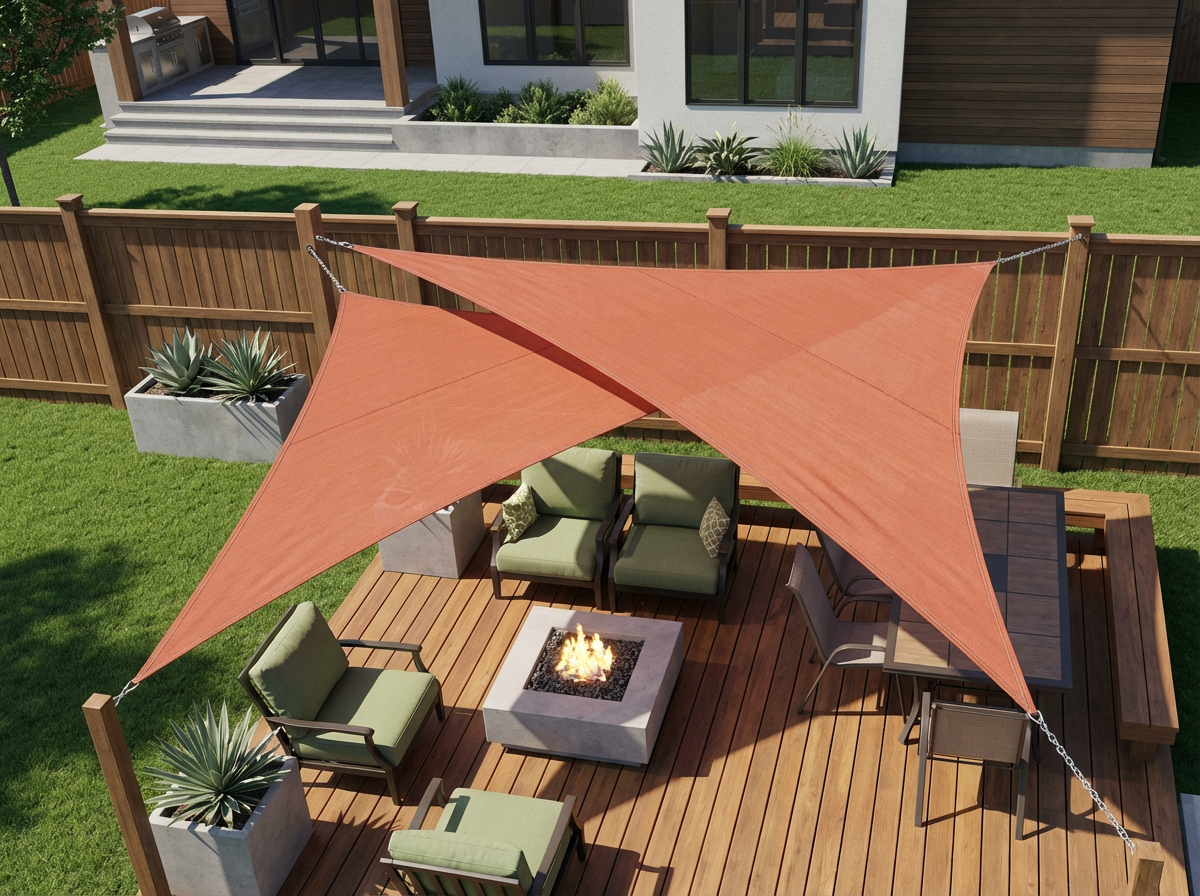
Equilateral triangles are commonly used in overlapping or grouped designs. Combining multiple sails creates visual interest, dynamic shade patterns, and excellent coverage over larger areas.

Schools, Playgrounds & Commercial Spaces
Frequently used in education and hospitality settings, this shape offers predictable coverage, clean lines, and a professional, well-planned appearance.
key features.
Designed to combine symmetry with strength, the Equilateral Triangle Shade Sail delivers reliable performance in a visually refined form. Every detail of its construction is engineered to promote even tension, durability, and long-term aesthetic appeal.
-
 Perfectly symmetrical design: Equal sides ensure even tension distribution for a stable and balanced installation.
 -
Reinforced 38mm webbing edge: Triple-stitched using long-life PTFE thread for superior durability and shape retention.
-
Curved edges for optimal tension: Minimises sagging and flapping while maintaining a smooth, floating appearance.
-
Architectural visual appeal: Clean geometry makes this shape ideal for feature installations and modern outdoor designs.

Frequently Asked Questions
All three sides are the same length, which creates even tension distribution and a balanced, symmetrical appearance.
Yes. Equilateral triangles are one of the most popular shapes for overlapping or grouped installations, offering both flexibility and visual impact.
When installed correctly, the even tension and curved edges help minimise movement and maintain a tight sail profile.
Absolutely. Its predictable coverage and clean geometry make it a popular choice for education and commercial environments.
Shadetec and Extrablock work well for most residential installs, while Monotec is recommended for larger sails or exposed locations.

you might also like.
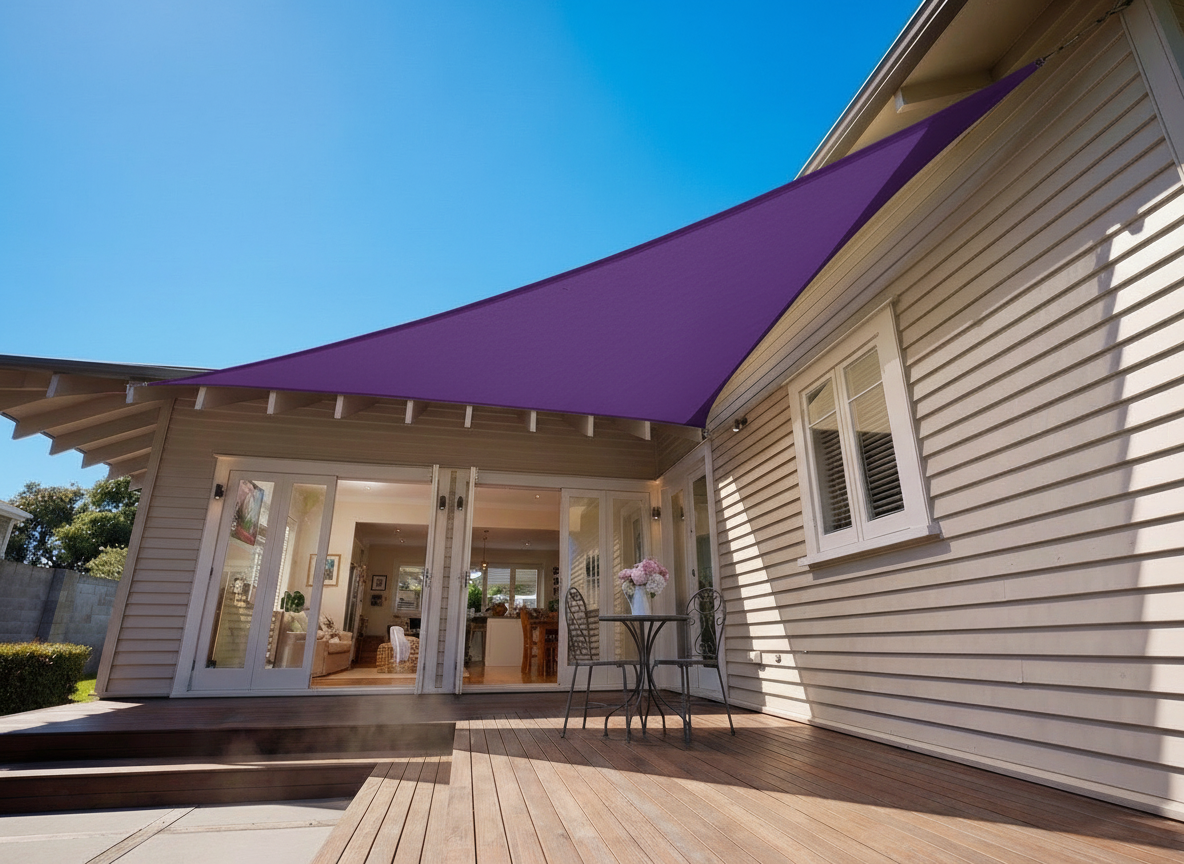
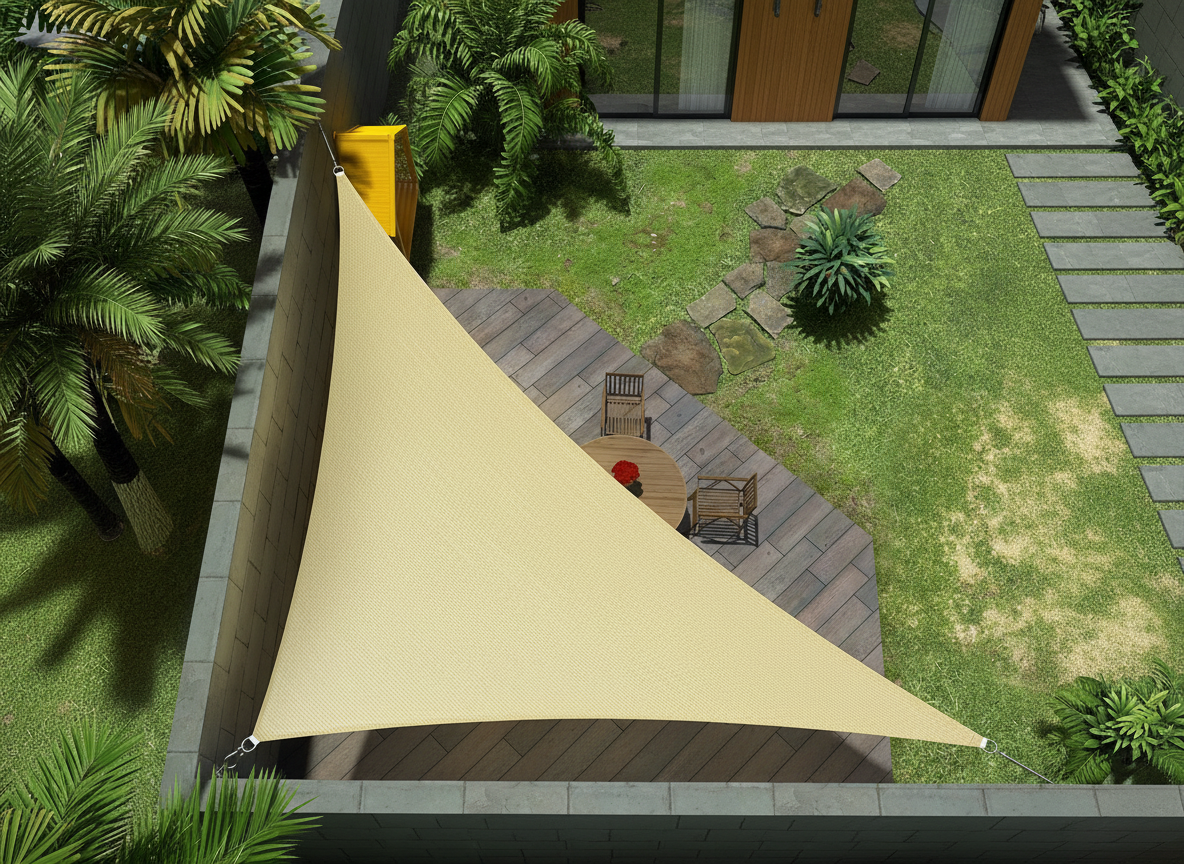
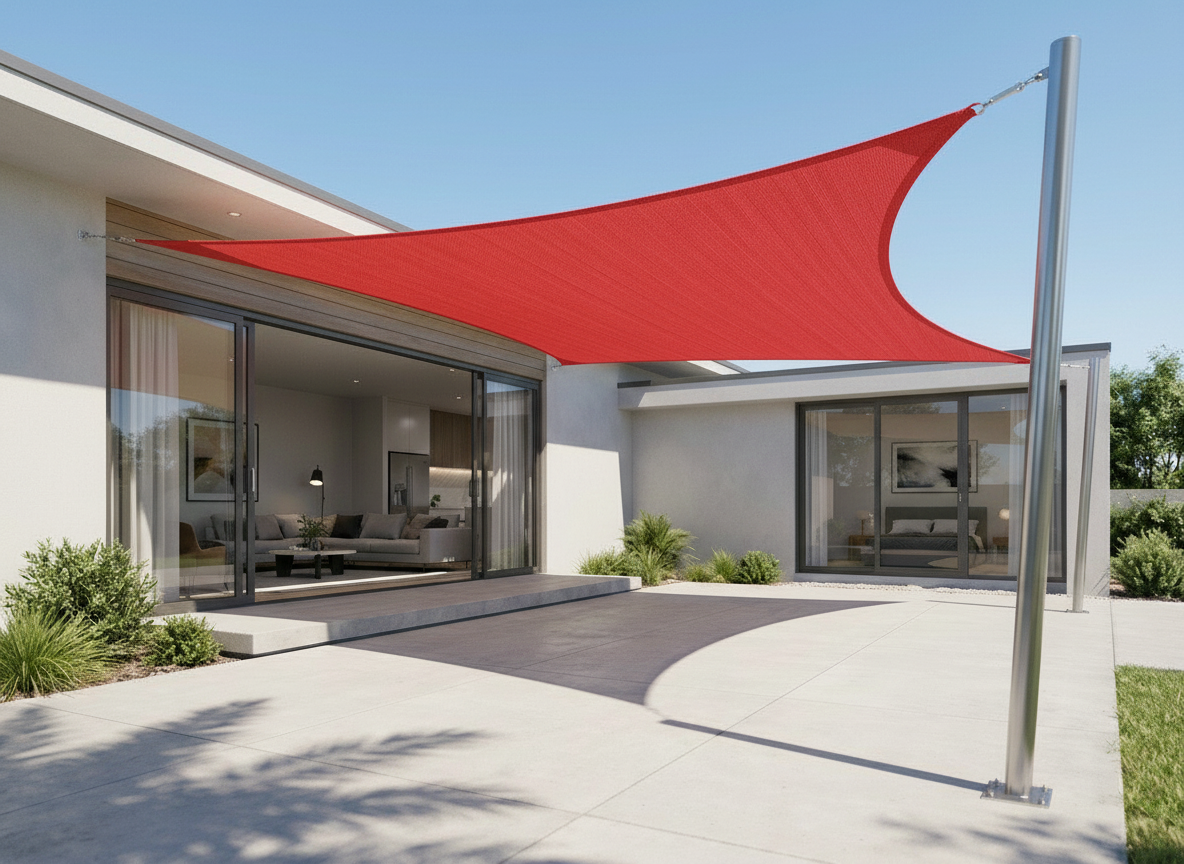
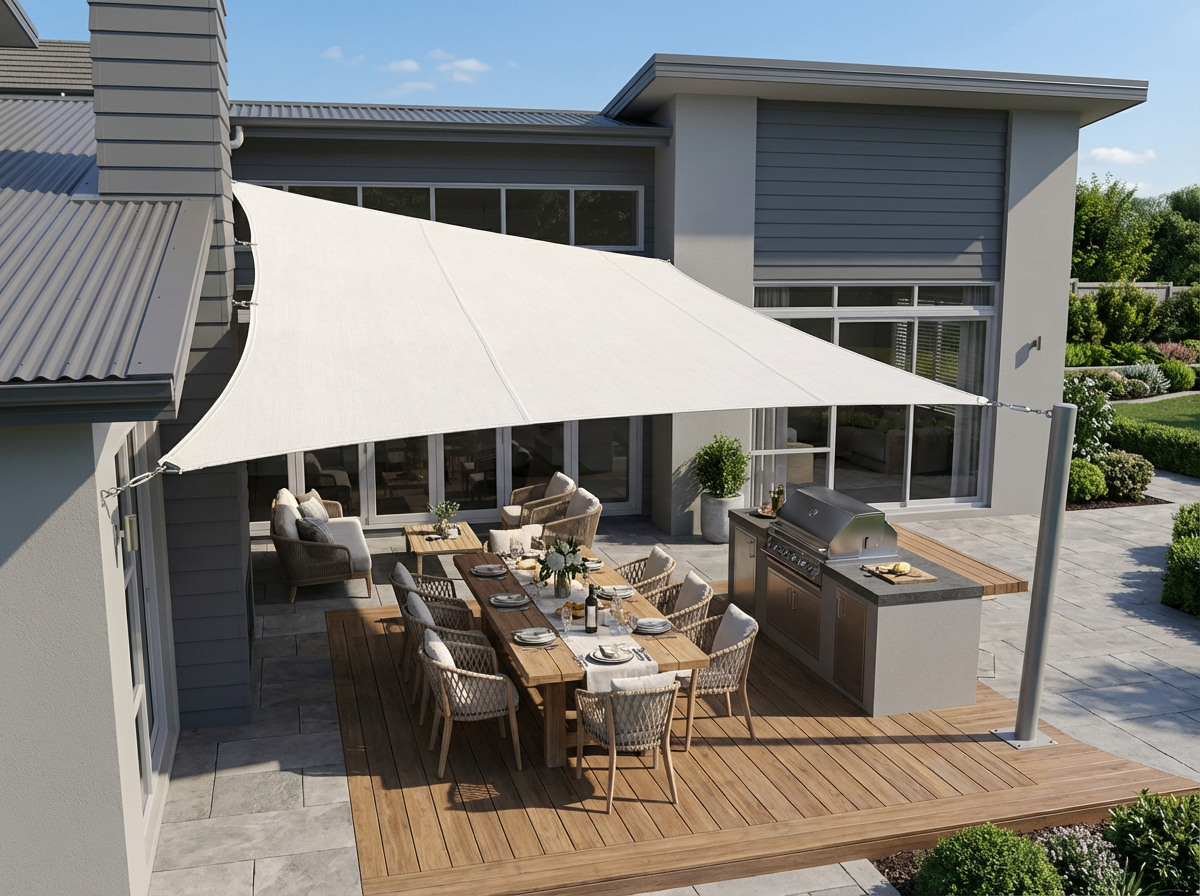
Right Angle Triangle Shade Sail
what our customers are saying.
If you have any questions, you are always welcome to contact us. We'll get back to you as soon as possible, within 24 hours on weekdays.
-
Shipping Information
Use this text to answer questions in as much detail as possible for your customers.
-
Customer Support
Use this text to answer questions in as much detail as possible for your customers.
-
FAQ’s
Use this text to answer questions in as much detail as possible for your customers.
-
Contact Us
Use this text to answer questions in as much detail as possible for your customers.