



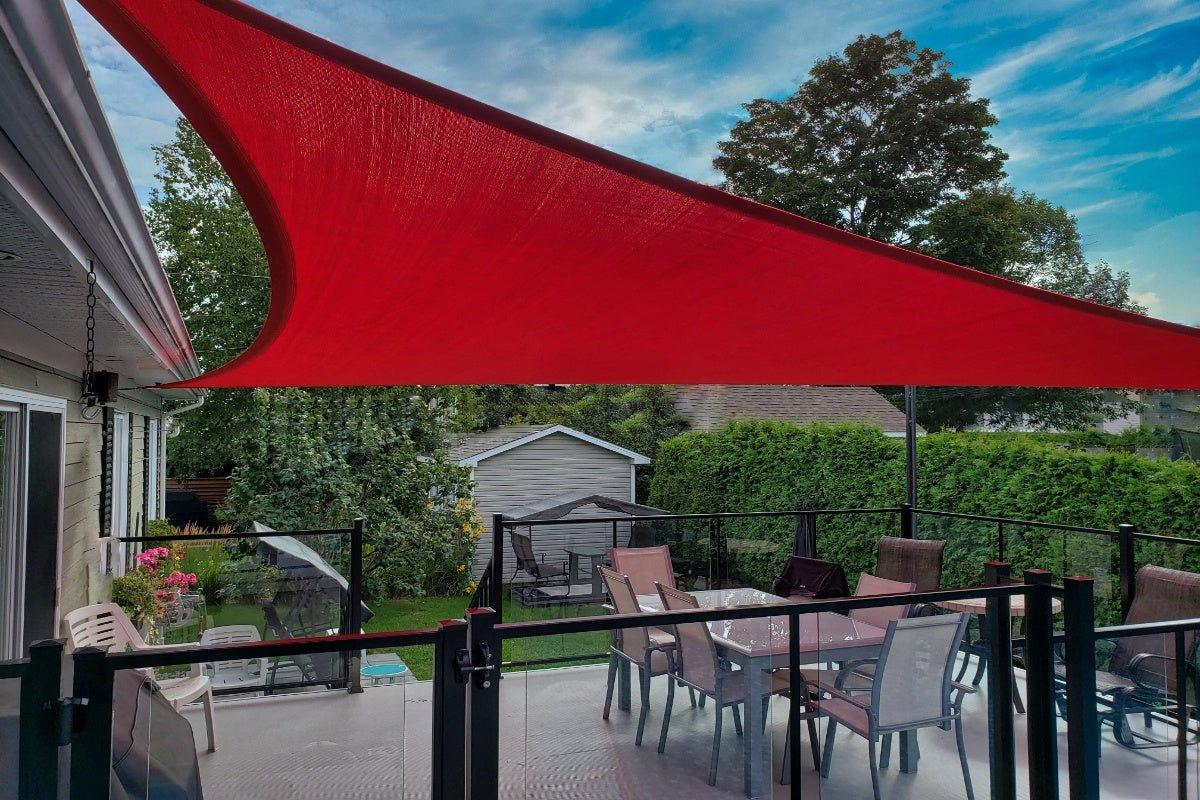
Can Shade Sails Withstand Strong Winds?
Yes — a properly designed and correctly tensioned shade sail can withstand strong winds.
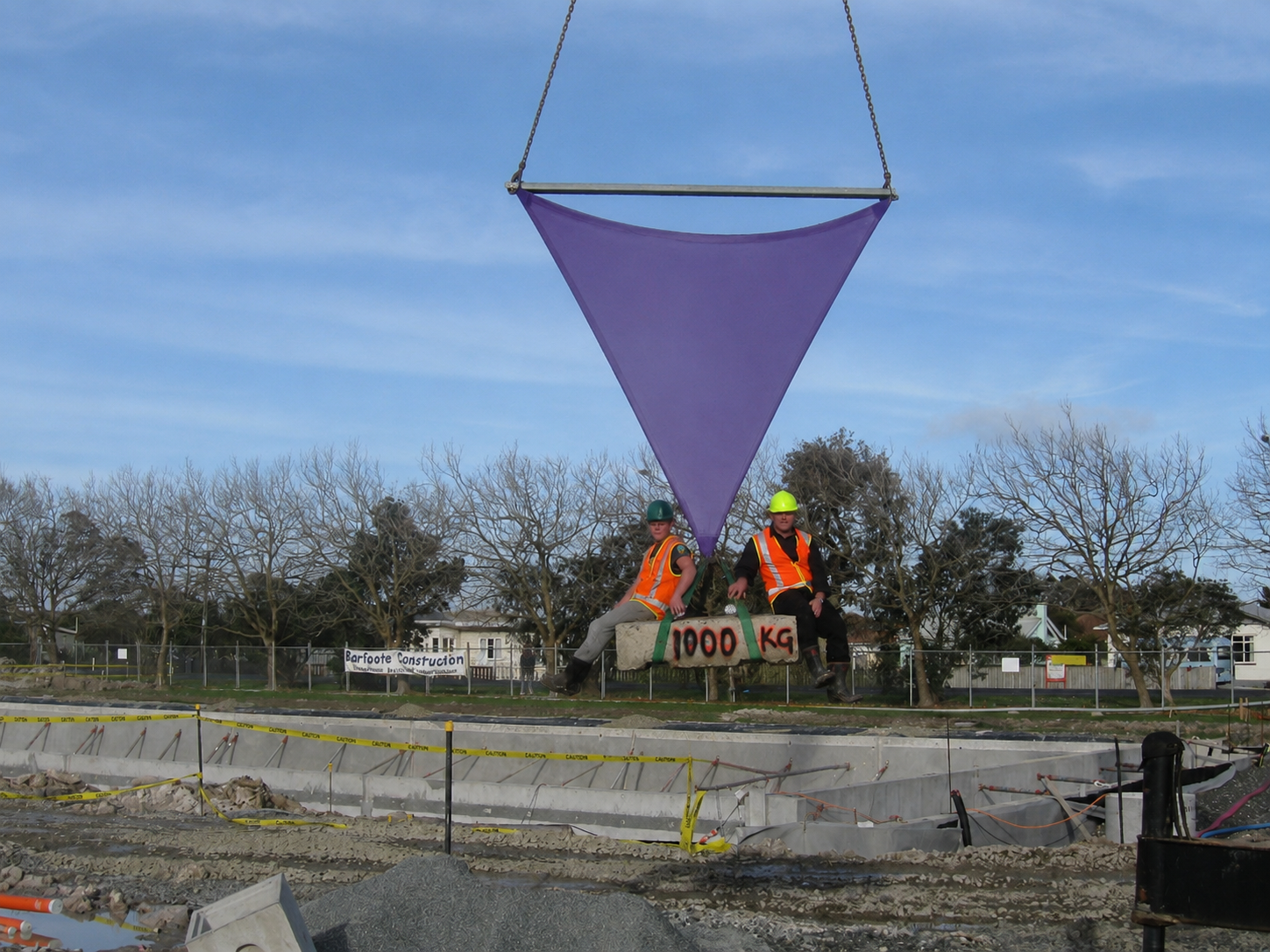
Shade sails are dynamic tension structures, which means wind loads are transferred directly into the fabric, hardware, fixing points, and supporting structure. The overall wind performance of a shade sail depends heavily on the design, installation quality, and ongoing fabric tension.
The three main factors that determine wind performance are:
- Fabric Type and Design
- Installation Quality
- Fabric Tension
1. Fabric Type and design
Not all shade sail fabrics perform the same way in windy conditions.
Commercial-grade shade fabrics are specifically engineered for tension structures and are designed to remain stable under constant tension while allowing controlled airflow through the fabric. This helps reduce wind pressure on the sail and lowers the load transferred into the fixing points and supporting structure.
Lower-grade fabrics generally have reduced dimensional stability and are more prone to movement, stretching, and premature wear under wind load.
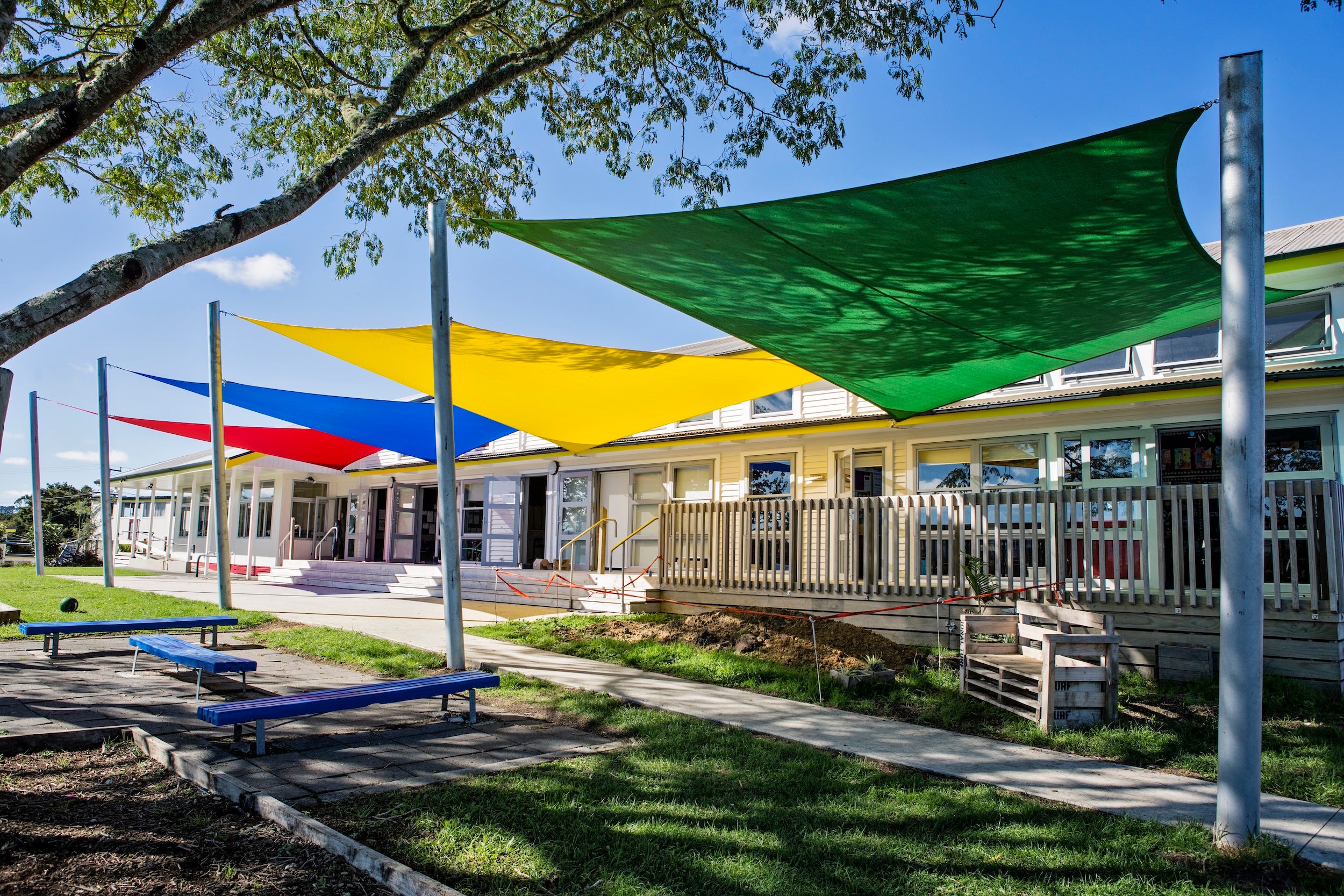
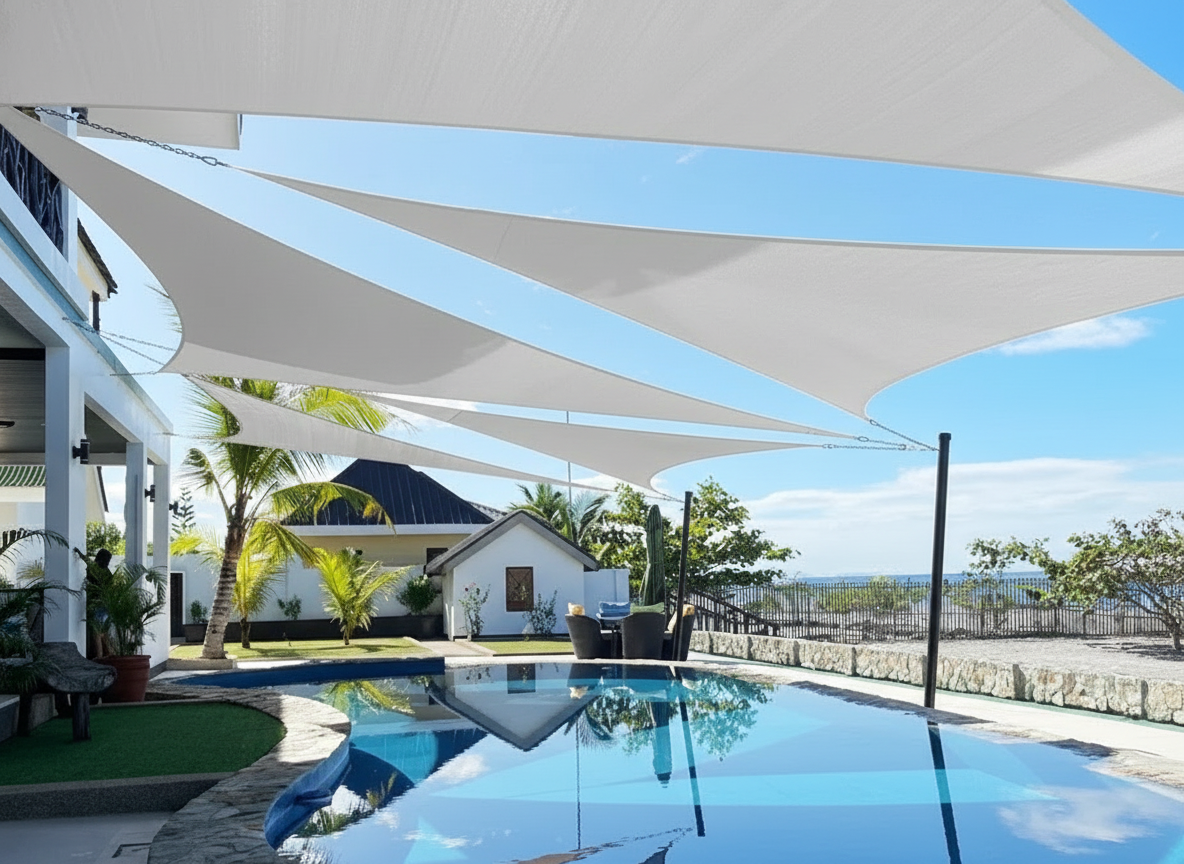
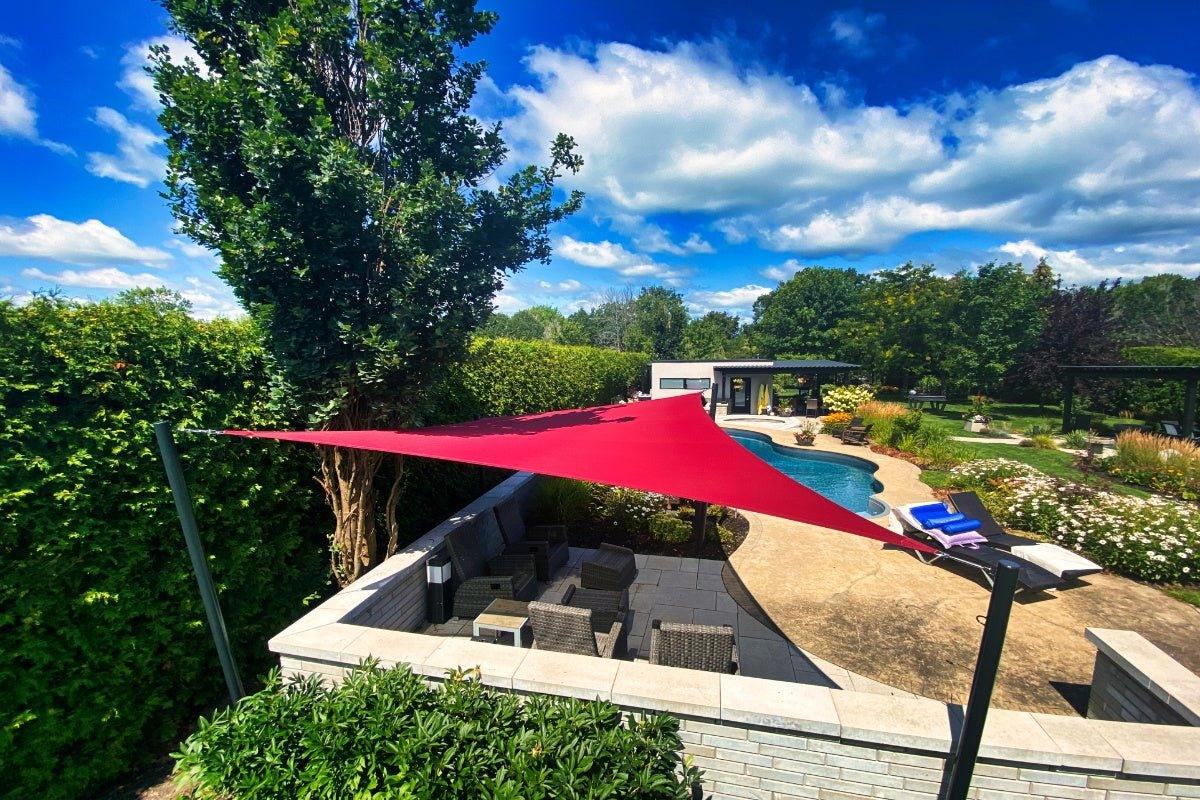
The shape of the sail also plays a major role. Flat sails tend to catch wind pressure, while correctly shaped sails with opposing high and low points (Hyper shape) allow wind to move more efficiently across the surface of the sail.
2. Installation Quality
Installation quality has a major impact on how a shade sail performs in strong winds.
Shade sails generate substantial loads even under normal weather conditions. During strong winds, these loads increase significantly and place constant stress on posts, fixing points and attachment hardware.
A properly installed shade sail should include:
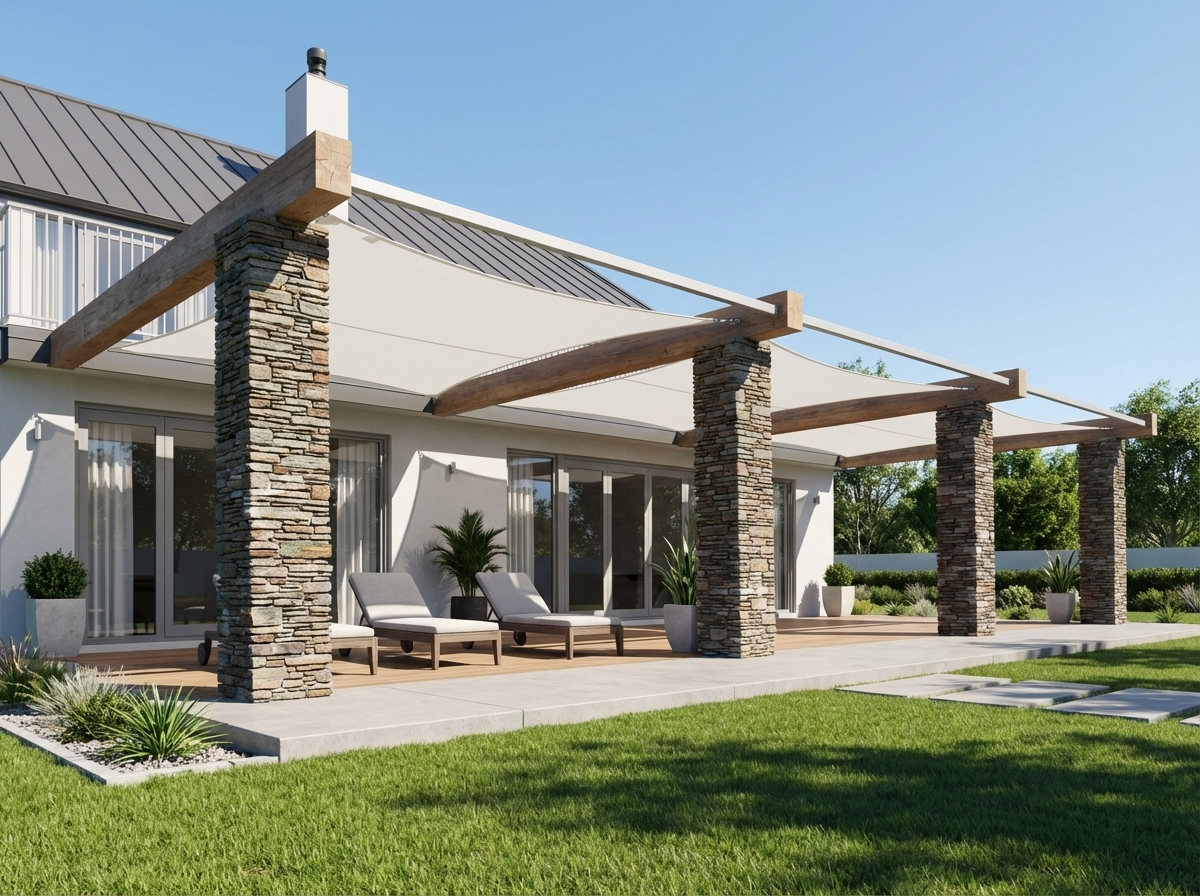
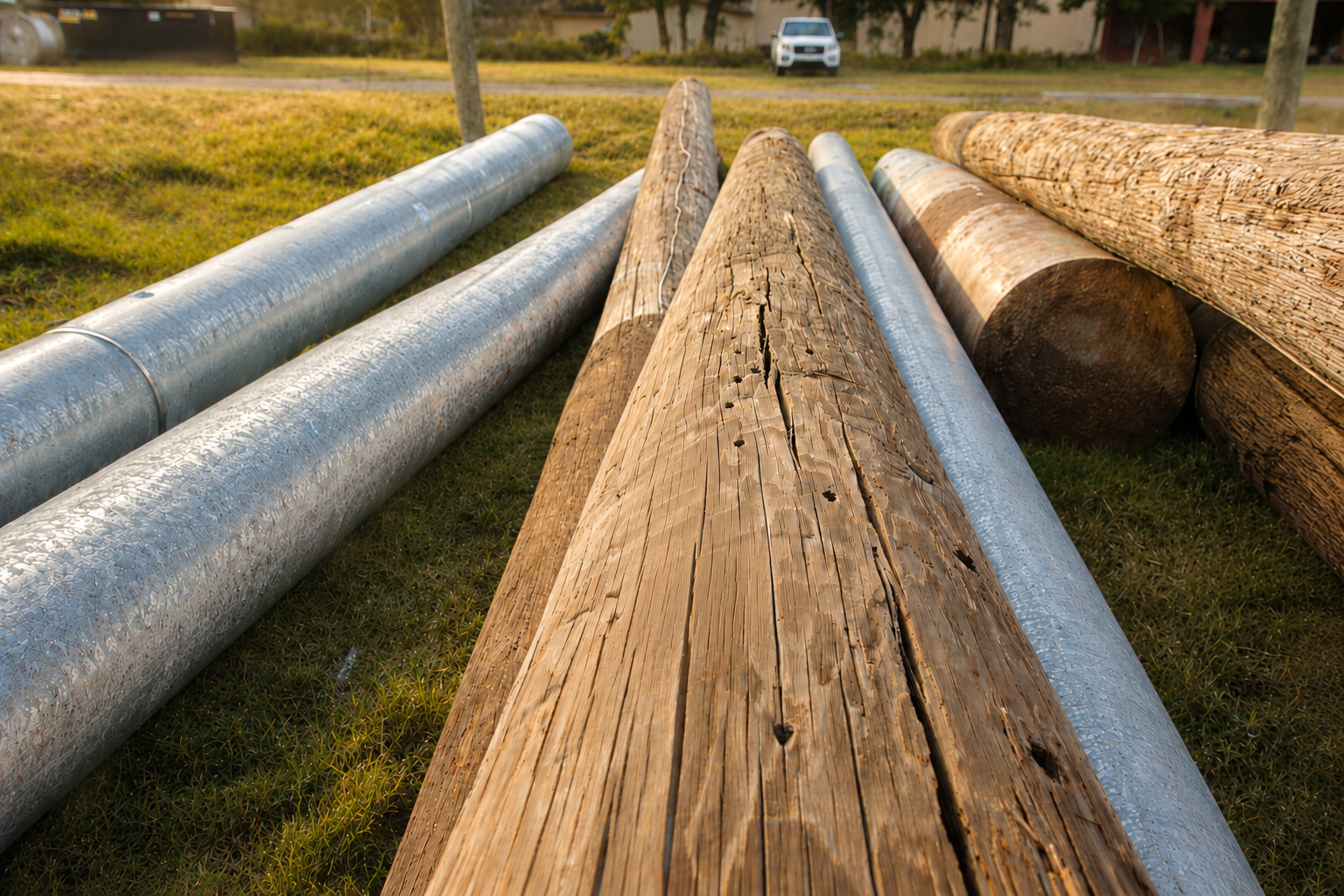
- Adequately sized posts
- Correct footing depth for posts
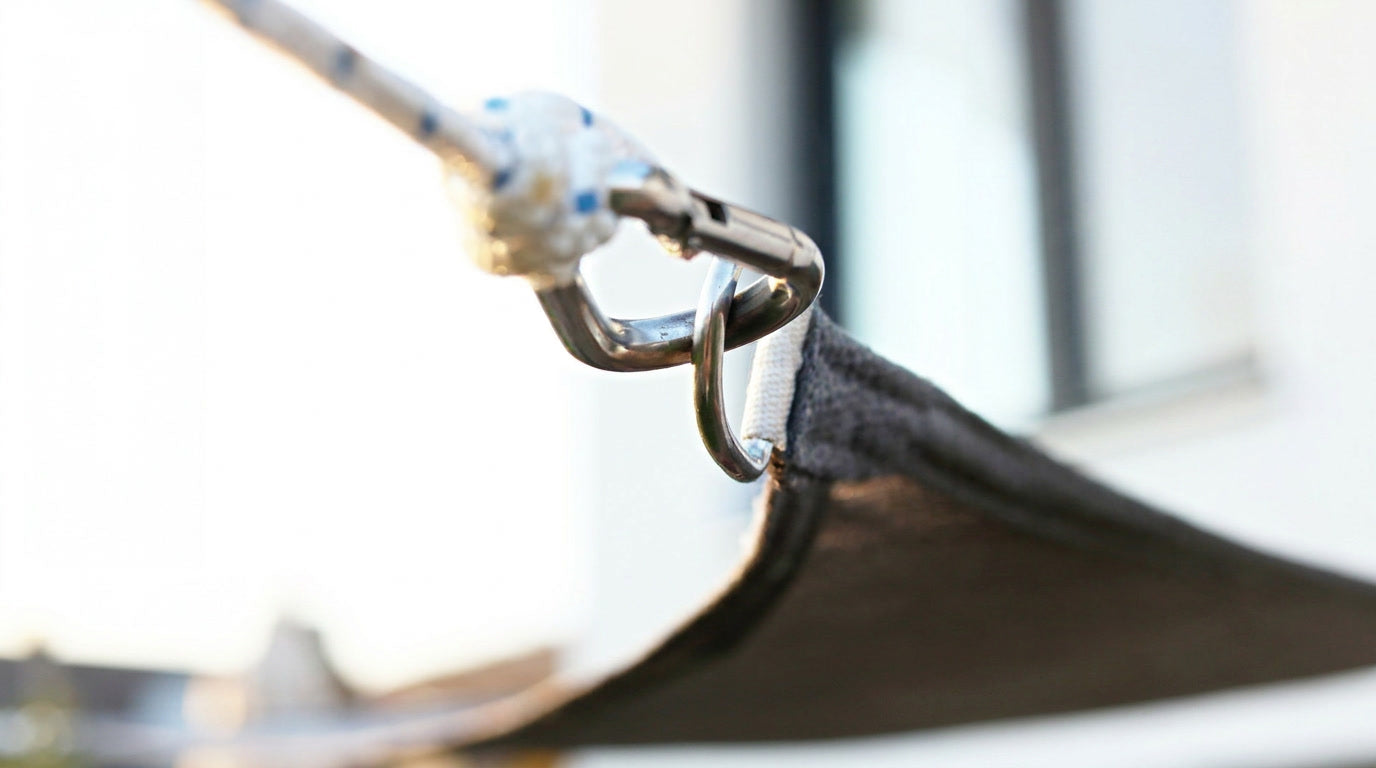
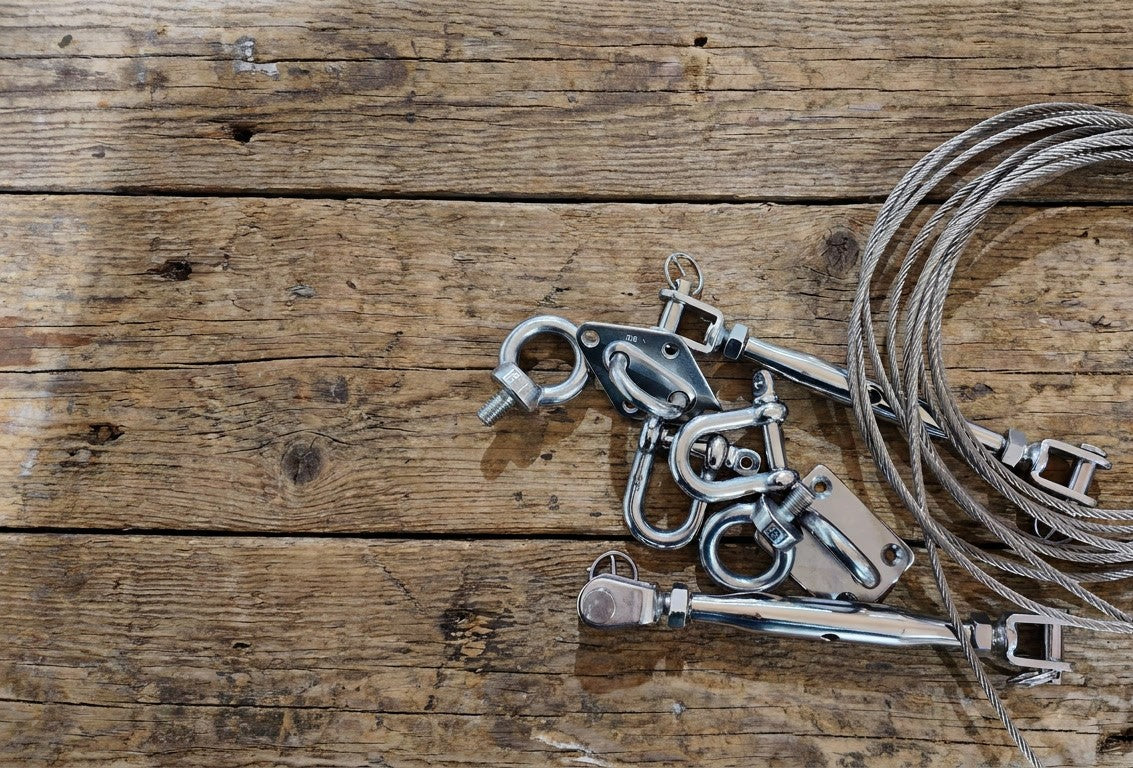
- High-quality stainless-steel hardware
- Well secured fixing point placement and heavy-duty brackets or eyebolts
- Noticeable height variation between corners (on 4 or more corner sails)
Adding height variation between opposing fixing points helps create the required three-dimensional shape within the sail. This improves stability and reduces excessive fabric movement during wind events. (Note it is not possible to obtain a twist in a 3-corner triangle sail).
Oversized or poorly positioned sails with under sized posts are far more likely to flap, sag, causing unnecessary stress & load to transfer onto the fixings and supporting structure.
3. Fabric Tension
Correct fabric tension is critical for wind resistance. A loose shade sail will flap excessively in windy conditions. This movement places additional stress on the fabric, stitching, hardware, and fixing points, which can lead to premature wear over time.
A correctly tensioned shade sail should maintain a smooth and stable surface with minimal movement. See just How much tension here.
Most shade sails will require occasional re-tensioning as the fabric settles after installation and naturally relaxes over time.
If your shade sail begins moving excessively in the wind, you should:
- Check if any turnbuckles have unwound and are locked off correctly
- Inspect fixing points for movement
- Check posts for any signs of deflection
- Inspect the fabric and stitching for damage
When Should a Shade Sail Be Removed?
A shade sail is not guaranteed to be cyclone-proof or designed for highly extreme weather events.
In severe storms or extreme wind conditions, removing the sail is often the safest option to protect both the sail and the supporting structure.
This is particularly important for:
- Large sails
- Coastal locations
- Elevated or exposed sites
A high-quality shade sail that is correctly designed, properly installed, and adequately tensioned can withstand strong winds very effectively.
Most issues associated with wind damage are not caused by the fabric itself, but by poor installation, inadequate tensioning, undersized fixing points, or incorrect sail design.
Need help choosing a wind-resistant Shade Sail?
Explore Shade Space’s Custom-Made Shade Sails designed for strength, tension performance, and long-term durability.



Share:
How Long Do Shade Sails Last?
Are Shade Sails Really Worth It?