

Every ShadeSpace Sail Is Built Tough - But the Whole System Matters
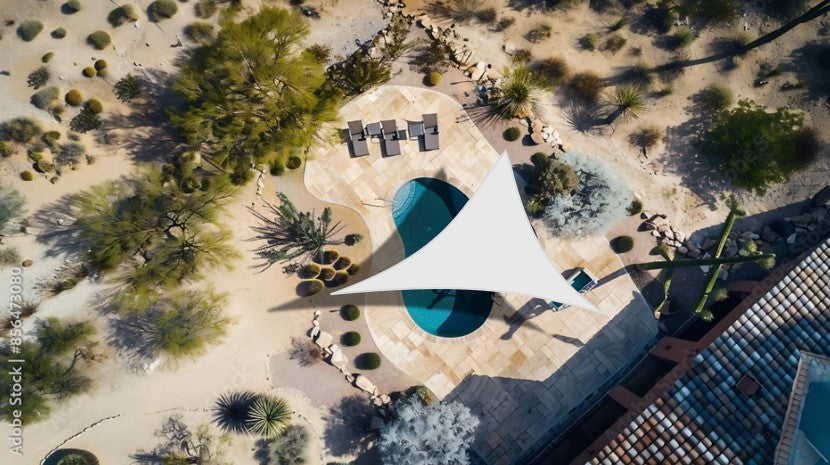
Low-cost, standard-size Shade Sails are widely available from department stores, home-improvement retailers and online sellers. They can be suitable for many temporary and light-duty applications.
These sails are often used in a similar way to a patio umbrella or retractable awning. They may be loosely suspended between suitable existing attachment points however are not designed to be a permanent or semi-permanent tensioned structure.
ShadeSpace takes a different approach.
Every ShadeSpace Shade Sail is custom manufactured to the same robust standard. When properly designed, tensioned and supported our sails are capable of performing in extremely demanding conditions. We don't manufacture a cheaper or lighter "fair-weather" version of the sail itself.
When we refer to a Fair-Weather Installation, we're describing the way the Shade Sail is supported and managed, not the quality of the ShadeSpace Shade Sail. The sail can remain exactly the same; it is the supporting structure and the requirement to remove the sail before high winds that define the installation level.
That's an important distinction because even a very strong Shade Sail is only one part of the complete structure.
A Shade Sail Is a Complete Tensioned System
A calm day tells you very little about the strength of a Shade Sail installation. Wind acting on a Shade Sail creates forces that need somewhere to go.
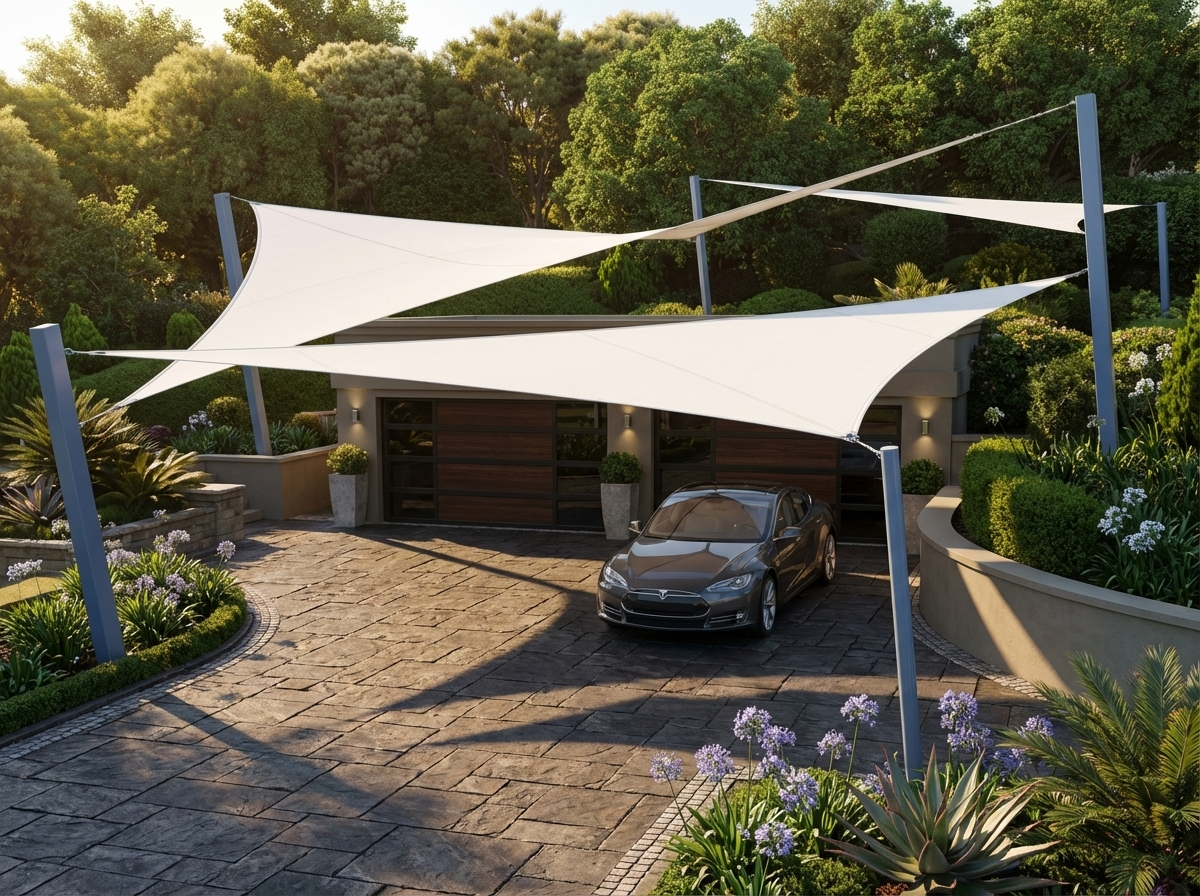
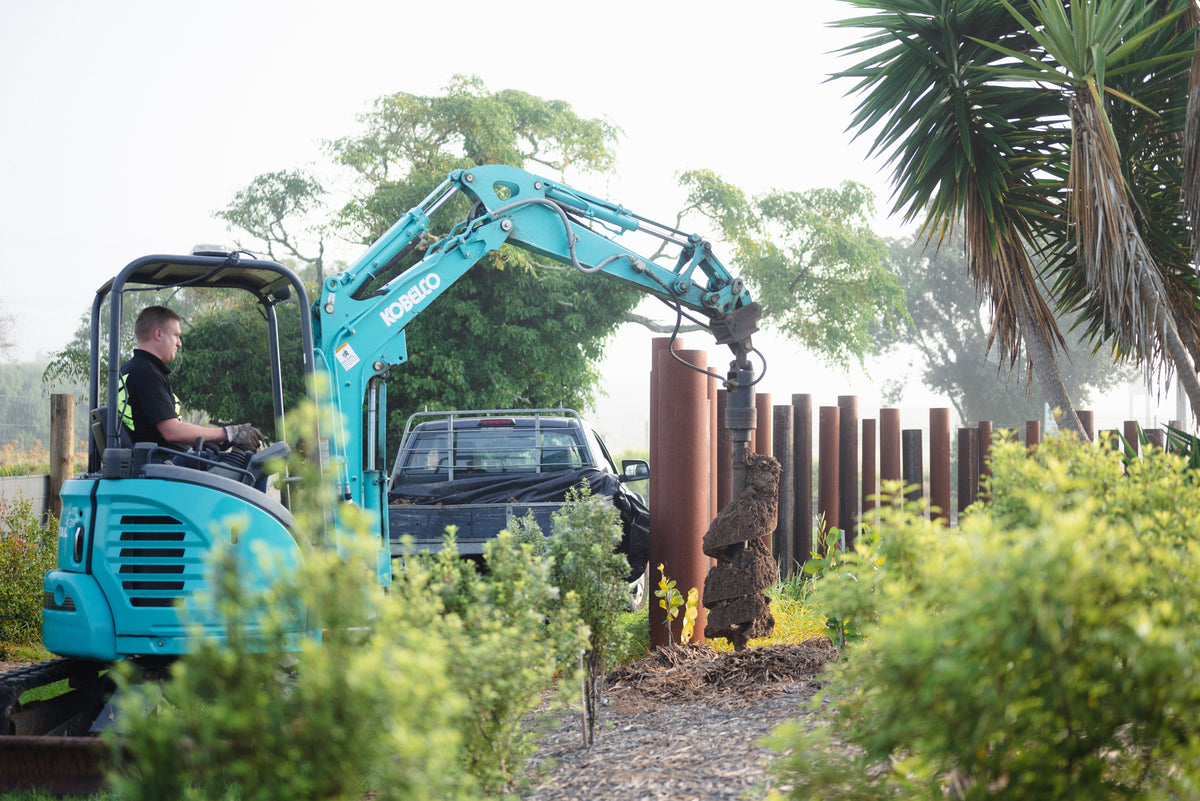
Those forces are transferred from the fabric through the corners, tensioning hardware and the attachment points. From there, they travel into the supporting posts or building structure and ultimately into the footings and surrounding ground.
That means the finished installation needs to be considered as a complete system.
As Shade Sails become larger, posts become taller or locations become more exposed, those factors become increasingly important.
Therefore the performance of the finished installation therefore depends on the following factors:
- Overall size and shape of the Shade Sail
- The sail proportions and length of each side
- Arrangement and height differences between attachment points
- Height and strength of supporting posts
- Footing size and depth
- Strength of any building attachments
- Soil conditions
- Site exposure and local wind conditions
- Installation and tensioning
A premium-quality Shade Sail attached to undersized posts, shallow footings or an unsuitable building attachment does not create a strong shade structure. Likewise, a poorly proportioned or incorrectly tensioned Shade Sail may move excessively in the wind, regardless of how well the sail itself was manufactured.
This is why ShadeSpace distinguishes between three levels of installation:
-
Fair-Weather Installation
-
Practical Residential Installation
-
Site-Engineered Installation
The quality of the ShadeSpace Shade Sail remains the same across all three. What changes is the level of support, planning and engineering used to create the complete structure and suit the conditions in which it will be used.
Before designing your Shade Sail, decide which installation level is appropriate for your site and how you intend to use it. While the quality of the ShadeSpace Shade Sail remains the same, factors such as sail size, site exposure, posts, footings and attachment points will determine the level of support and planning required.
1. Fair-Weather Installation

Best suited to periodic or seasonal use in sheltered, very-low-wind locations, with removal before high winds or severe weather.
A Fair-Weather Installation is intended to provide shade during calm, settled conditions.
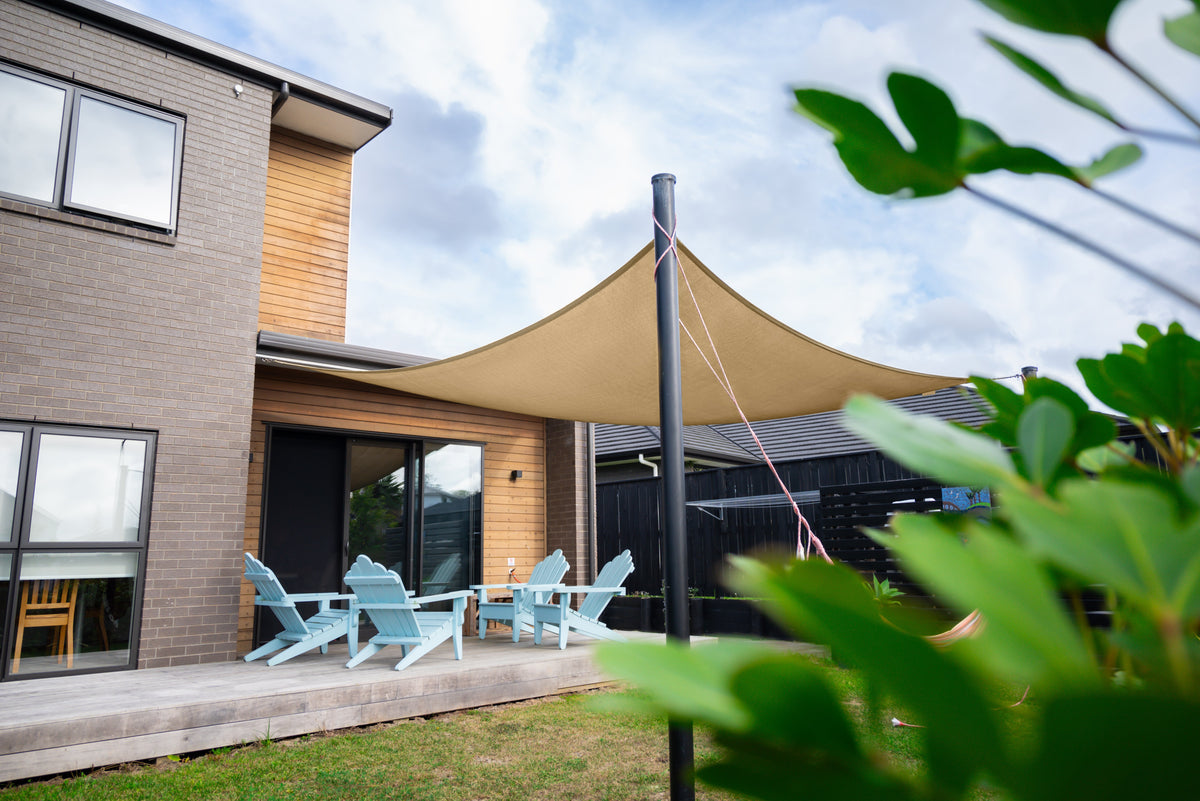
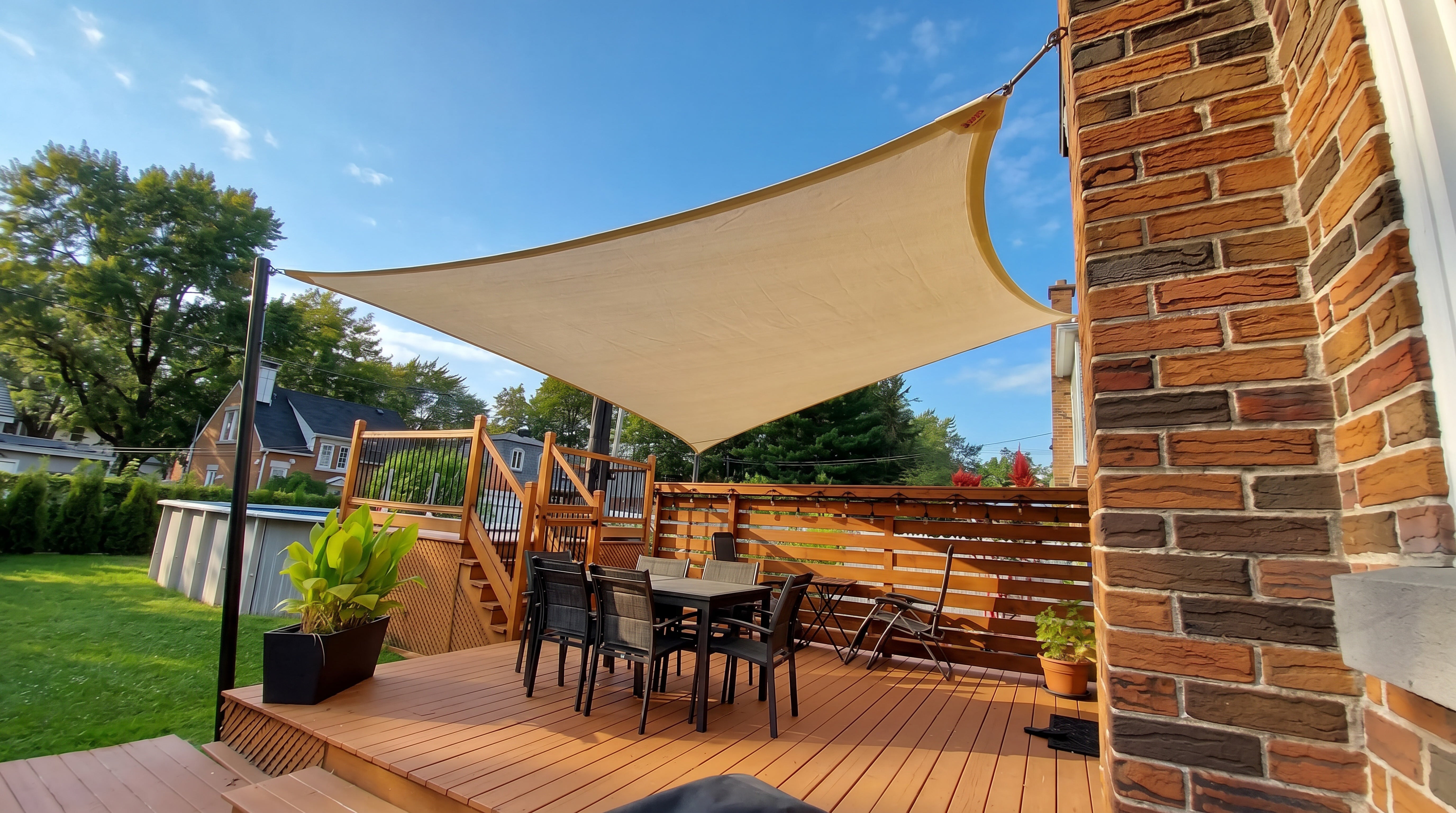
It might involve a relatively small Shade Sail in a sheltered location or a removable Shade Sail supported by relatively lightweight posts and attachment points.
The important point is that removing the Shade Sail when stronger winds are expected is part of how this type of installation is used.
Almost any Shade Sail installation can look successful on a fine, still day. The real test comes when the wind picks up.
An inadequately supported Shade Sail can pull out an attachment point, damage a fascia or other building component, bend or break a post, or come loose causing further damage.
Choose the Fair-Weather Install approach only when:
- The Shade Sail is relatively small.
- The location is well sheltered.
- The Shade Sail can be removed quickly.
- Someone will be available to remove it before strong winds or severe weather.
- The owner understands and accept the limitations of a fair-weather installation.
Important: 'Removable in strong winds' is an operating requirement - not an engineering solution.
See ShadeSpace Posts and Footings Guide A for post and footing guidance for Fair-Weather Installations — periodic or seasonal use in sheltered, very-low-wind locations, where the Shade Sail will be removed before high winds or major storms.
2. Practical Residential Installation

Best suited to typical residential Shade Sail installations with low-to-moderate exposure.
This is the middle-ground approach for many backyard Shade Sail projects.
Posts, footings and hardware are selected using Shade Space's experience-based residential guidelines, together with practical consideration of factors such as Shade Sail size, post height and site exposure.
These guides are based on practical experience and proven installations. However, they are not a substitute for site-specific structural engineering. They cannot account for every possible combination of wind exposure, soil conditions, building strength, or local code requirements.
A Practical Residential Installation is therefore based on practical experience and intended for typical residential conditions, but is not supported by site-specific engineering unless you separately obtain it.
A Practical Residential Installation may be suitable when:
- The site is a typical residential property.
- Wind exposure is low to moderate and reasonably understood.
- Ground conditions provide suitable footing support.
- The Shade Sail falls within the limits of the relevant ShadeSpace guides.
- Building attachment points are checked for adequate structural strength.
- Site-specific engineering is not required by your local authority.
See ShadeSpace Posts and Footings Guide B for post and footing guidance for Practical Residential Installations — more substantial, experience-based construction for typical residential sites with low-to-moderate exposure.
3. Site-Engineered Installation

Best suited to large, exposed, commercial, public, permitted or otherwise demanding Shade Sail installations.
A Site-Engineered Installation is designed or verified for the particular project by a suitably qualified structural engineer.
Rather than relying on general installation guidance, the engineer can assess the actual Shade Sail, site and supporting structure.
Depending on the project, the engineer can consider:
- Shade Sail size, shape and design tension
- Local design wind conditions and site exposure
- Post height, size and material
- Footing dimensions and ground conditions
- Loads transferred into buildings
- Connection hardware and attachment details
- Applicable building codes and permit requirements
Site-specific engineering is the appropriate choice for large Shade Sails, exposed locations, unusual ground conditions, critical building attachments and commercial or public installations, as well as projects where engineering or permits are required by the relevant authority.
If there is uncertainty about whether the general ShadeSpace installation guides are appropriate for a particular site, obtaining site-specific engineering provides a way to have the actual conditions assessed.
Fair-Weather, Practical Residential or Site-Engineered: What's the Difference?
The easiest way to compare the three Shade Sail installation levels is by looking at how substantial the complete structure needs to be and how you intend to use it.
- Fair-Weather Installation — Removable: Best for smaller, sheltered applications where the Shade Sail can be removed before high winds or severe weather. The ability and commitment to remove the sail is an important part of this approach.
- Practical Residential Installation — Experience-Based: Uses more substantial posts, footings and hardware based on Shade Space's practical residential guidance. It is intended for typical residential conditions that fall within those guidelines, but is not a substitute for site-specific engineering.
- Site-Engineered Installation — Site-Specific: Designed or verified by a qualified structural engineer using the actual site conditions, Shade Sail geometry, supporting structure and applicable requirements.
The important point is that the quality of the ShadeSpace Shade Sail doesn't change between these three approaches. What changes is the level of support, planning and engineering behind the complete installation.
Before deciding on your Shade Sail size and fixing-point layout, consider which installation level suits your site and intended use. A smaller Shade Sail in a sheltered location that you're prepared to remove when required may suit the Fair-Weather approach. A typical backyard project may fall within the Practical Residential guidelines, while larger, exposed, unusual, commercial or regulated projects should have site-specific engineering rather than extending general residential guidance beyond its intended use.
Whichever approach you take, a strong Shade Sail needs a supporting system appropriate for the conditions in which it will be used.
Once you've identified the appropriate installation level, use the relevant ShadeSpace DIY post and footing, measuring and installation guides to plan your fixing points and custom-made Shade Sail.







Share:
Webbing vs Wire Edge Shade Sails: Which Is Best?